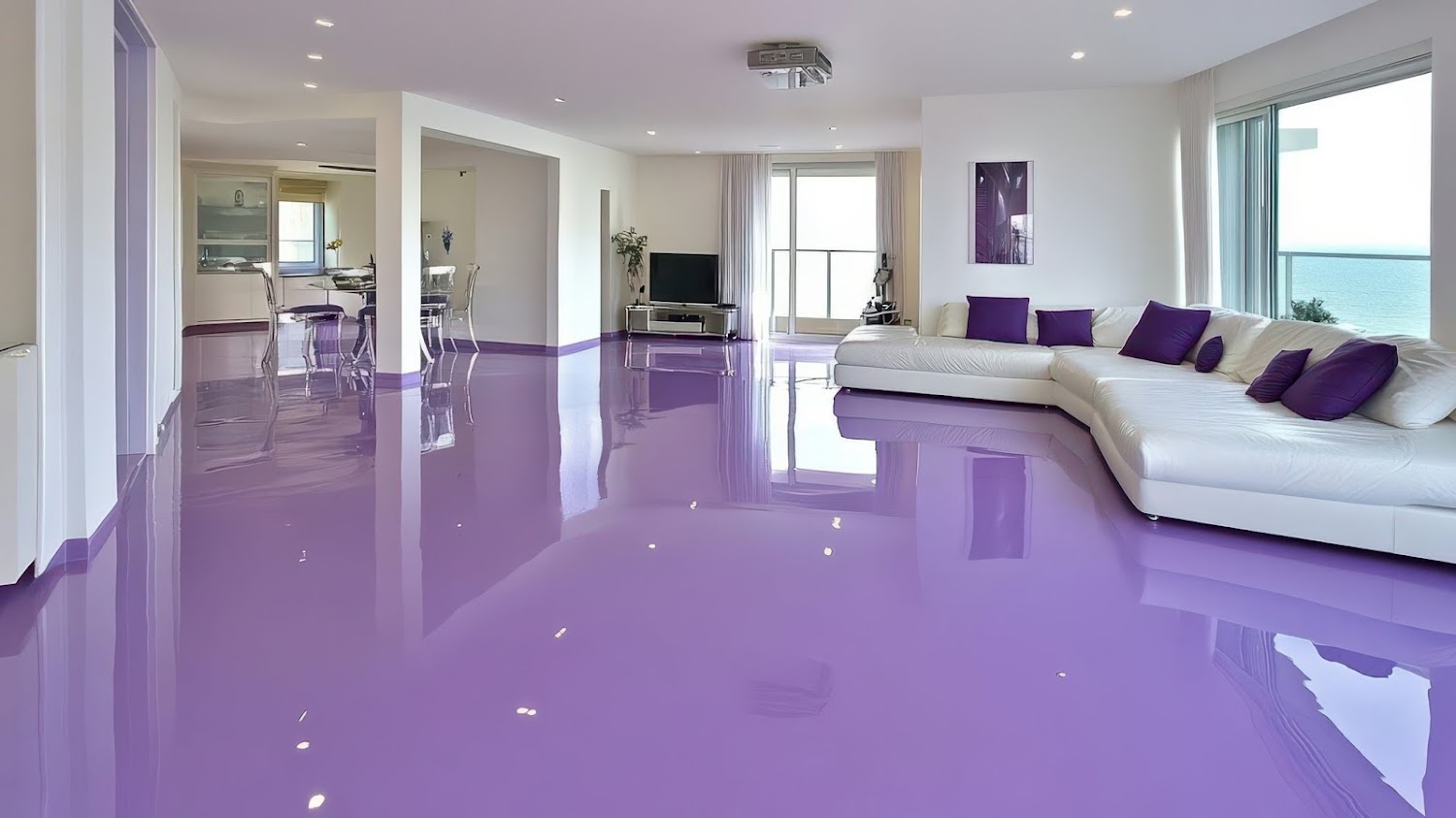
Garage floors covered in oil stains. Warehouse floors worn down by years of forklift traffic. Basement concrete that’s cracked, dusty, and impossible to keep clean. Epoxy flooring solves all of these problems at once, transforming plain, vulnerable concrete into a durable, attractive, easy-to-maintain surface that holds up to years of daily use.
In this guide, EMR Epoxy Flooring Corp walks through what epoxy flooring actually involves, the different coating options available, how residential and commercial needs differ, and what to expect during professional installation.
What Is Epoxy Flooring?
Epoxy flooring is a resin-based coating system applied directly over concrete, creating a hard, seamless, chemical-resistant surface. Unlike paint, which sits on top of concrete and wears away relatively quickly, epoxy bonds with the concrete itself, forming a durable layer that resists stains, moisture, impact, and abrasion far better than an untreated or painted floor.
This makes epoxy flooring a popular choice across a wide range of settings, from residential garages and basements to commercial warehouses, retail spaces, and industrial facilities.
Why Epoxy Flooring Is Worth the Investment
Exceptional Durability
Properly installed epoxy flooring can withstand heavy foot traffic, vehicle weight, dropped tools, and chemical spills without cracking, chipping, or staining, making it one of the most durable flooring options available for both homes and businesses.
Easy Maintenance
Epoxy floors are seamless and non-porous, meaning dirt, dust, and spills sit on the surface rather than soaking into the concrete. This makes cleanup fast and straightforward, whether it’s a garage floor or a busy commercial space.
Improved Safety
Many epoxy coating systems include options for slip-resistant textures, which is particularly valuable in commercial and industrial settings where spills or moisture could otherwise create a safety hazard.
Enhanced Appearance
Beyond function, epoxy flooring offers a clean, polished look that instantly upgrades the appearance of a space. With a range of colors, finishes, and decorative options available, epoxy can be tailored to match both practical needs and aesthetic preferences.
Long-Term Value
While epoxy flooring represents an upfront investment, its durability and low maintenance requirements often make it more cost-effective over time compared to repeatedly repairing or replacing worn concrete or other flooring materials.
Epoxy Flooring Options to Consider
Epoxy Floor Coating
For property owners who want to enhance and protect existing concrete without a full flooring replacement, an epoxy floor coating provides a seamless, protective layer that improves both durability and appearance at a lower cost than other options.
Polyaspartic Polyurea Coating
For those who want superior durability and a faster installation timeline, polyaspartic polyurea coating offers rapid curing and strong UV stability, making it especially well-suited to spaces exposed to sunlight or requiring quick turnaround, such as garages or commercial entryways.
Residential Epoxy Flooring
Residential epoxy flooring is a popular upgrade for garages, basements, and utility spaces, offering homeowners a durable, low-maintenance surface that resists stains and everyday wear while enhancing the overall look of the space.
Commercial Epoxy Flooring
Commercial epoxy flooring is engineered to withstand the demands of business environments, including heavy foot traffic, machinery, and chemical exposure, making it a go-to solution for warehouses, retail spaces, and industrial facilities.
Residential vs. Commercial Epoxy Flooring Needs
While the core benefits of epoxy flooring apply across both residential and commercial settings, the priorities often differ.
Residential projects typically focus on garages, basements, and utility spaces, with homeowners often prioritizing appearance alongside durability, choosing decorative flake systems or custom color combinations to complement their home.
Commercial projects tend to prioritize heavy-duty performance, chemical resistance, and fast installation to minimize business disruption, particularly in warehouses, manufacturing facilities, and retail environments where floors face constant, demanding use.
Understanding which priorities matter most for your specific space helps determine the right coating system and installation approach.
What Affects Epoxy Flooring Cost
Several factors influence the overall cost of an epoxy flooring project:
- Surface Preparation — Concrete in poor condition may require additional prep work, such as crack repair or grinding, before coating can begin.
- Coating System — Standard epoxy, polyaspartic, and specialty decorative systems vary in material cost.
- Square Footage — Larger spaces naturally involve more material and labor.
- Design Complexity — Custom colors, decorative flakes, or intricate patterns can add to the overall cost compared to a standard solid-color finish.
- Traffic and Use Requirements — Commercial and industrial spaces with heavy use may require additional protective topcoats, affecting overall pricing.
A detailed, in-person assessment is the best way to get an accurate cost estimate for your specific project.
What to Expect During Epoxy Flooring Installation
Understanding the general process can help property owners feel more prepared for their project.
1. Initial Assessment A technician evaluates the current condition of your concrete, checking for cracks, moisture issues, or other factors that could affect the coating’s performance.
2. Surface Preparation Proper preparation, often involving grinding or shot-blasting the concrete, is critical to ensuring the epoxy bonds correctly. This step is one of the most important factors in how well the finished floor performs over time.
3. Repair Work Any cracks or damage identified during the assessment are repaired before coating application begins.
4. Coating Application The epoxy or polyaspartic coating is applied in carefully controlled layers, with attention to even coverage and proper curing time between coats.
5. Final Topcoat and Curing A protective topcoat is applied to enhance durability and, if desired, add slip resistance. The floor is then left to cure fully before regular use resumes.
Common Epoxy Flooring Mistakes to Avoid
- Skipping proper surface preparation, which is one of the leading causes of epoxy coating failure
- Installing over concrete with unresolved moisture issues, which can cause the coating to bubble or peel
- Choosing a coating system that doesn’t match the space’s actual use, such as a decorative residential system in a heavy-industrial setting
- Attempting a DIY installation without proper equipment, often resulting in uneven application and premature wear
Working with an experienced installer helps avoid these common pitfalls and ensures a floor that performs the way it’s meant to.
How to Choose the Right Epoxy Flooring Contractor
Not every contractor brings the same level of expertise to epoxy flooring installation. When choosing a provider, consider the following:
- Experience Across Residential and Commercial Projects — A contractor familiar with both settings can recommend the right system for your specific space.
- Proper Surface Preparation Practices — Ask about their process, since this step is critical to long-term performance.
- Quality Materials — High-performance epoxy and polyaspartic products deliver better durability than lower-grade alternatives.
- Transparent Pricing — A trustworthy contractor provides a clear, itemized estimate before work begins.
- Strong Portfolio — Reviewing completed projects gives you a clear sense of the quality and finish options available.
Frequently Asked Questions
How long does epoxy flooring last? With proper installation and reasonable care, epoxy flooring can last many years, even in high-traffic commercial and industrial settings.
How long does installation typically take? Most residential epoxy flooring projects take one to three days, while larger commercial projects vary based on square footage and coating system.
Can epoxy flooring be installed over cracked concrete? Yes, but cracks need to be properly repaired as part of the surface preparation process to ensure the coating adheres correctly and doesn’t fail prematurely.
Is epoxy flooring slippery? Standard epoxy can be slippery when wet, but many coating systems include slip-resistant additives, which are especially recommended for commercial and industrial spaces.
What’s the difference between epoxy and polyaspartic coatings? Polyaspartic coatings cure faster and offer strong UV stability, making them well-suited for spaces exposed to sunlight, while epoxy offers excellent durability and a wider range of decorative finish options.
Can epoxy flooring be used in a basement? Yes, though any moisture issues should be addressed first, since epoxy applied over a basement floor with ongoing water intrusion problems is unlikely to perform well long-term.
Final Thoughts
Epoxy flooring offers a powerful combination of durability, easy maintenance, and appearance that few other flooring options can match, whether you’re upgrading a residential garage or protecting a commercial facility’s floors. Understanding the different coating systems available, how residential and commercial needs differ, and what proper installation involves helps property owners make an informed decision for their specific space.
Whether you’re dealing with worn, stained concrete or simply want a more durable, attractive floor, EMR Epoxy Flooring Corp brings the expertise and quality materials needed to deliver a finished floor that performs well for years to come.